Funding
We said no twice
Halyard crossed $6M in June with no outside capital, two declined term sheets and a growth rate its co-founder calls unfashionable. Tom Aldous on what restraint actually cost — in salary, in staff, in years.
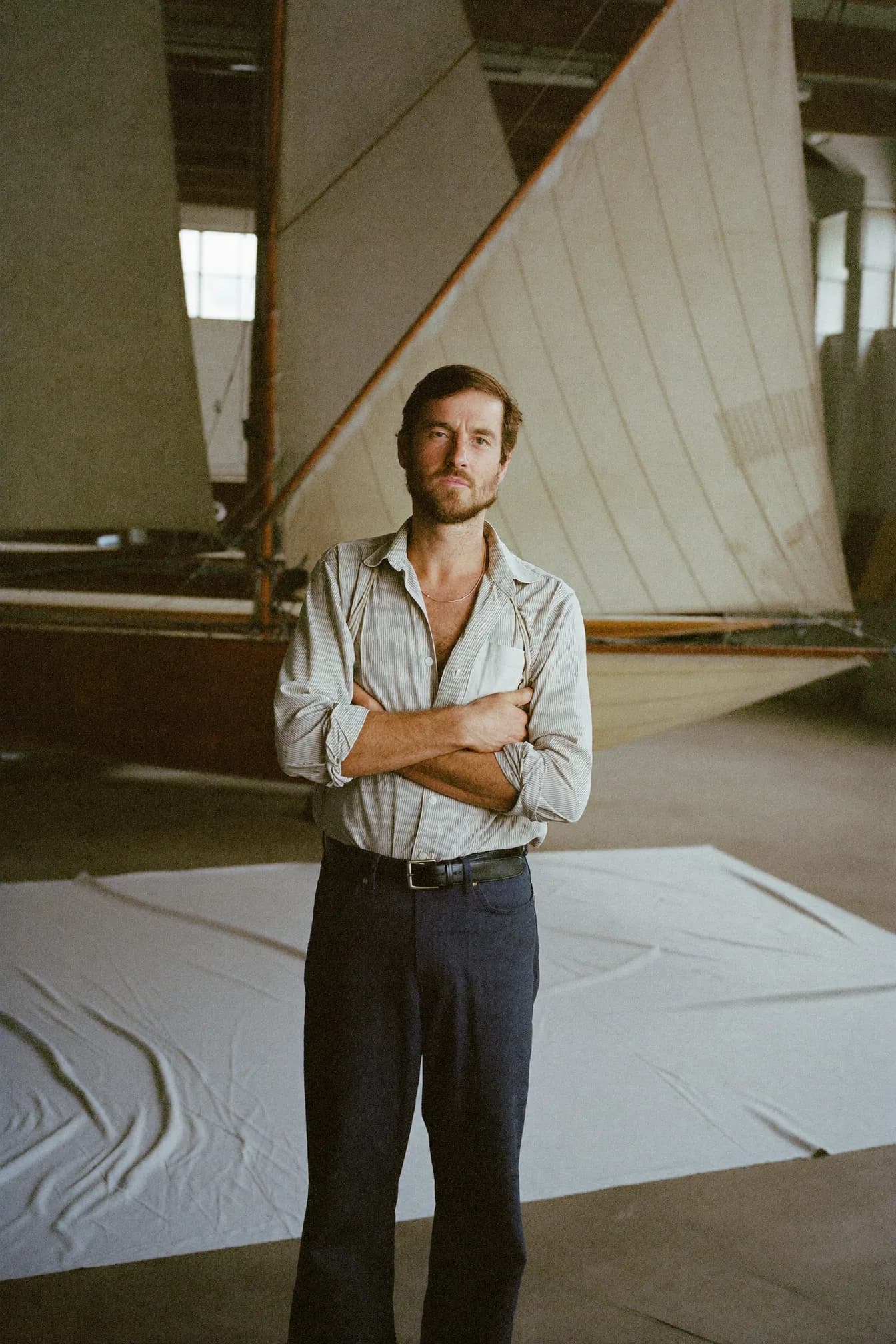
The floor of the Halyard loft is one continuous plane, sanded flat to a tolerance Tom Aldous can quote from memory, because sails are cut on the ground and the ground is therefore a tool. You take your shoes off. There is a main spread across most of it this morning for a boat whose owner has been waiting eleven weeks and will wait two more.
Aldous is 41, unhurried, and has the sailmaker’s habit of touching cloth while he talks about something else entirely. In June the company’s annual recurring revenue crossed $6 million — roughly 70% of it now sitting in service contracts that bill on a schedule rather than per job. It employs 31 people. Aldous and his co-founder Ana Ferreira own all of it, which is the part he wants understood before anything else.
The first no was easy
2022. Halyard had come out of the sensor years, found that the money was in servicing sails rather than measuring them, and put together its first genuinely good twelve months. A fund that had never previously looked at anything you could get wet made an offer at a valuation Ferreira has since called “flattering and wrong.” The founders would have kept a majority. They took the meeting in a rented conference room, because the loft had no chairs.
“They asked what we’d do with it,” Aldous says. “And I had a real answer — I wanted a second cutting table and a rigging shop. That’s maybe $600,000. So the honest response was: I’d do the thing I want, and then I’d have millions left over and a new job, which is spending millions.”
“Money doesn’t sit still. If you take more than you have a use for, you will invent the use, and the invented uses are always the ones that kill you.”
The second no was not
Last autumn was harder. The fund was better — one that had actually read the market, that knew what a rigging refit costs and how often boats need one. The partner had raced. The questions were good. The plan was specific: acquire two regional rigging outfits inside eighteen months and consolidate servicing on the eastern seaboard. Again, the founders would have kept a majority. And Halyard had a genuine problem — a backlog it could not clear and a competitor that had taken money and started hiring their people.
What stopped them was not ideology. It was a constraint Aldous can state as a single number. A sail cutter takes about four years to work independently on custom orders, Halyard has never hired one who was already finished, and the loft can supervise three apprentices at a time without slowing the seniors down. Three. That is the ceiling, and no amount of money moves it.
“The plan was excellent,” he says. “It just required us to buy trained people. And the trained people we’d be buying are the ones already too busy to train anybody else. You get to year four with double the revenue and nobody who can cut a mainsail. Then you’ve got a very well-funded problem.” He is aware this sounds like a story told by the winner. He offers, unprompted, that the two riggers the fund identified have since been bought by somebody else, and that he does not know whether that was a mistake. “Ask me in 2030.”
What slow actually cost
Asked what the two noes cost, he answers immediately, in the tone of a man who has kept the list:
- Four years of his own salary held at what the loft pays its senior cutters — a rule set in year two and never revisited — while a competitor’s founder paid himself $240,000 out of a seed round.
- Two cutters hired away in 2024 by a shop that could pay more. He could not match the offer and told them so.
- A rigging division he wanted in 2022 and opened in 2025 — three years of a business that didn’t exist.
- Roughly $900,000 in bank debt, personally guaranteed, which is a sentence he says his wife would like included.
What they kept: the whole thing, and the ability to be wrong quietly. Halyard has been profitable every year since its third and does not hold board meetings. “Nobody writes about a company that just carries on,” Aldous says, walking the edge of the sail with his shoes in his hand. “There’s no headline in it. But it arrives every June, and I don’t have to sell anything to get it.”