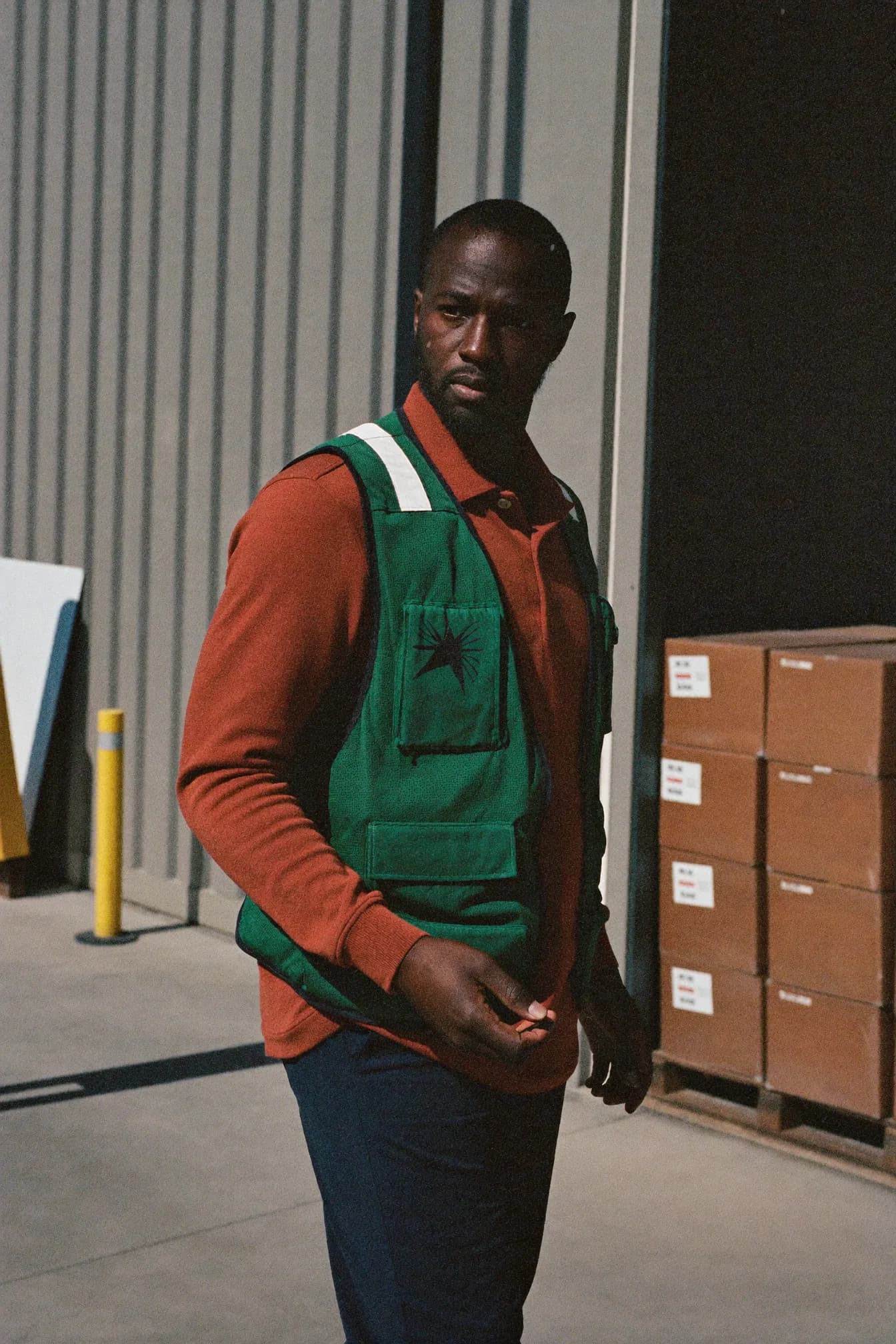
The warehouse Daniel Kwame has rented in the south of the city is cold, badly lit, and roughly the size of the floor Nexa gave its customer-support team. He seems delighted by it. “There’s a leak over there,” he says, pointing at a stain the shape of Portugal. “I know exactly who has to fix it. Me. That’s new.”
Kwame joined Nexa as employee eleven in 2015, when the company was three rooms and a routing algorithm that mostly worked. He left in July 2026, by which point it employed a little over four thousand people and he was running a division of six hundred. In between, he learned what he calls “the difference between building a thing and maintaining a thing.”
The meeting that did it
He is careful about how he describes leaving. There was no blow-up, no thwarted promotion. What there was, he says, was a Tuesday in March where he sat in a four-hour meeting about the naming convention for a feature flag.
“It was a good meeting,” he says, and means it. “Everyone in it was smart. The decision mattered, in a small way. And I remember thinking: I have somewhere between twenty and twenty-five working years left, and I have just spent four hours of them on this.”
“At eleven people you are solving the problem. At four thousand you are solving the problem of four thousand people solving the problem. Both are real work. Only one of them is the work I want.”
He gave five months’ notice — long enough, he says, that nobody could accuse him of leaving a mess. His options had vested. He will not say what they were worth, and deflects the question twice before answering it a third way: “Enough that this next part is a choice and not a gamble. That’s a privilege. I’d rather say that plainly than pretend I’m brave.”
What the second one is
The new company does not have a name yet, which Kwame finds funnier than his engineers do. What it has is a thesis: that the emissions cost of cold-chain logistics is mostly invisible to the people paying for it, and that making it visible changes what they buy.
The plan, for now, is deliberately small:
- Three people until there is revenue. Two engineers and him.
- One customer segment — regional food distributors — until it works.
- No outside money in year one, so the first version answers to the people using it.
It is a shorter list than the one he would have written at Nexa, and he knows it. He has watched the other version of this movie: the seed round, the hiring plan built on a forecast, the eighteen months of runway that quietly become a deadline.
The part he is worried about
Kwame is not sentimental about starting over. Asked what scares him, he answers immediately, and it isn’t money.
“At Nexa I had an org. If I had an idea on a Monday, forty people could work on it by Friday. Here, if I have an idea on a Monday, I have to have it, build it, and sell it, and I am forty-eight hours older than I was.” He shrugs. “The leverage was the drug. That’s the thing I have to get clean off.”
He expects the first year to be worse than he imagines, and says so without any of the performance that usually attaches to that admission. Then he goes back to the leak, which is, as he pointed out, now entirely his problem.