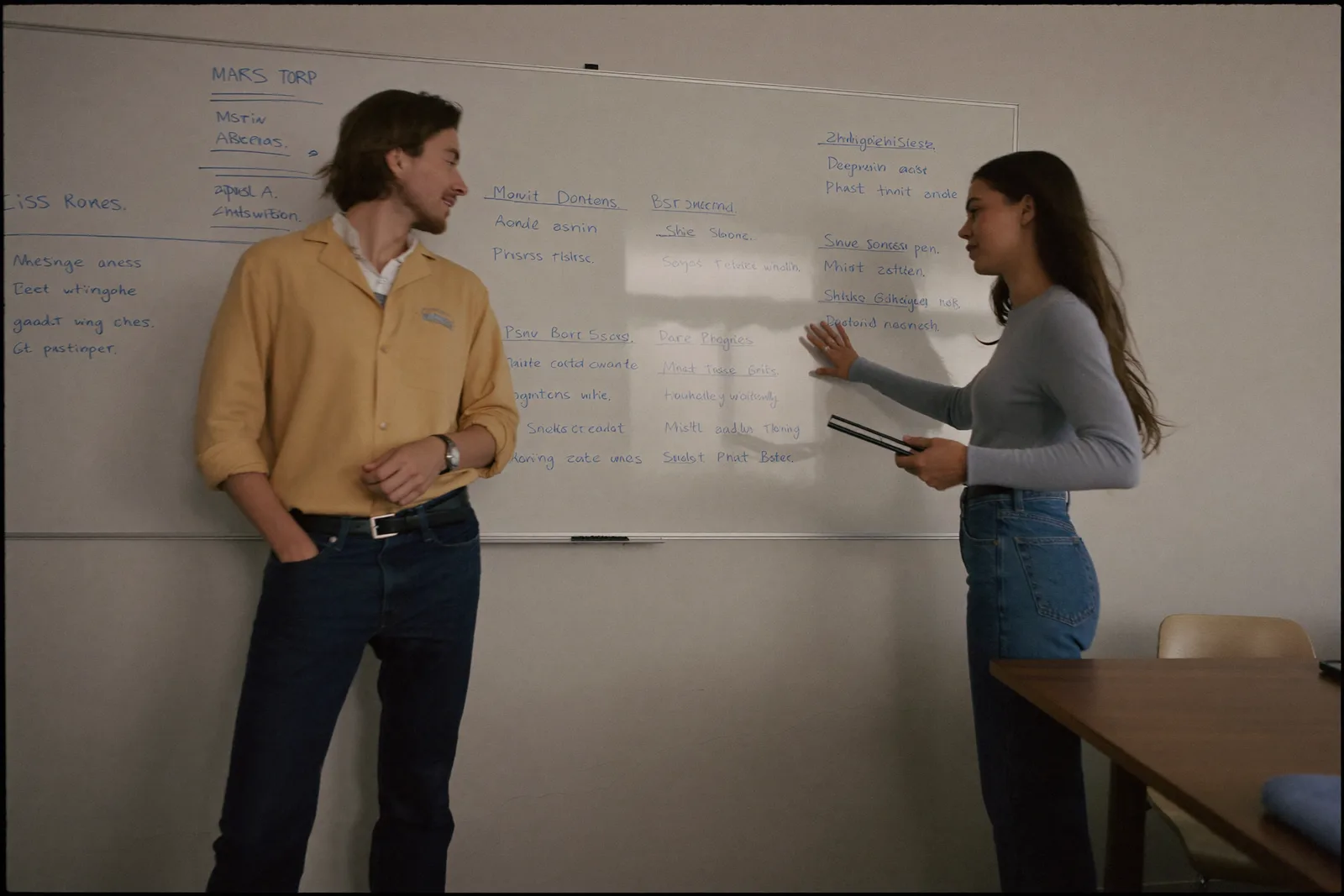
The whiteboard in the corner of Halyard’s loft has one column that never gets erased. It is headed “Not doing,” and it is longer than anything else in the room. Motor yachts. A hardware line. A Newport office. Two term sheets, each written up on the day it was declined. Ana Ferreira added the first entry in March 2021 and says she has never once been tempted to wipe it. “People ask how we got to six million,” she said. “The list is the answer. It’s just an unsatisfying one.”
Halyard makes and services sails and rigging. It employs 31 people, has been profitable since its third year, has never raised outside capital, and passed $6M in annual recurring revenue this June. Ferreira and Aldous own all of it. Neither has a story about a moment when everything changed, which is a problem when you are trying to write about them, and the reason the whiteboard is more useful than the founders are.
The Tuesday product
The company’s first product was not sails. It was a rigging-tension sensor — a puck the size of a pocket watch that clamped to a shroud and reported load to a phone. Aldous had built the prototype before Ferreira joined, and it was, by every account including his own, good. Eleven boatyards had agreed to trial it. A regional sailing club had asked about fitting forty. They killed it on a Tuesday in October 2020, nine weeks before the trial units were due. The reason was boring. Ferreira had spent three weeks at the yards watching what riggers actually did with tension numbers, and the answer was mostly nothing — the number confirmed a judgement they had already made by hand. The people who wanted the puck were owners, not riggers, and owners bought one, once, and never again. Meanwhile every yard she visited complained about the same thing: their sail servicing was six weeks out and nobody would give them a date.
The sensor answered a question no one was actually asking. The servicing backlog was a question everyone was shouting.
Aldous took it badly for about four days. He has since called the decision the best one the company ever made, which Ferreira notes is easy to say six years and six million dollars later. What she thinks actually mattered is that they killed it before the trial rather than after — because after, there would have been eleven yards with units on their boats and a moral obligation to support them for a decade. The sensor is in a drawer in the loft. Aldous will show it to you if you ask.
Two term sheets and a training constraint
The first term sheet arrived in 2022, at a valuation Ferreira calls “flattering and wrong.” The second came last autumn, from a fund with a specific plan: acquire two regional rigging outfits inside eighteen months and consolidate servicing on the eastern seaboard. Both offers left the founders with a majority. Both were declined inside a week.
The reason is not ideological, and Ferreira gets impatient when people try to make it so. It is arithmetic about people. A sail cutter takes roughly four years to work independently on custom orders, and Halyard has never hired one who was already finished — partly conviction, mostly because they don’t exist in the numbers the company would need. The loft runs three apprentices at a time, a figure set by what the senior cutters can supervise without slowing their own work. So the growth ceiling is not demand and it is not capital. It is three. “The fund’s plan was excellent,” Aldous said. “It just required us to buy trained people, and the trained people we’d be buying were the ones already too busy to train anyone else. In year four you have double the revenue and nobody who can cut a mainsail.”
The markets they skipped
The “Not doing” column is mostly markets, and each entry has a date and a one-line reason in Ferreira’s handwriting:
- Motor yachts, 2022 — “No sails. Obviously. Someone still asked.”
- Racing syndicates, 2023 — margin fine, cash terms ruinous, everything due the week after the season ends.
- Retail rigging hardware, 2023 — would have meant a warehouse and a catalogue, neither of which anyone in the building wanted to run.
- A Newport office, 2024 — declined twice, once by each founder, four months apart, without consulting the other.
- Sail cloth manufacture, 2025 — “We are customers. Good ones. Stay that way.”
The Newport entry is the one they argue about. There is a plausible version of Halyard that took the office, chased the regatta trade, and is twice the size today. Aldous concedes it. He also points out that the version would have been staffed by cutters flown in from the home loft, which is a sentence he can finish two ways and neither ends well. What’s coming instead is modest by design: a second loft in early 2027, leased rather than bought, and a fourth apprentice slot if a senior cutter volunteers to supervise it. Nobody has volunteered. Ferreira says the slot stays empty until someone does, which is either discipline or stubbornness depending on which of the two you ask. The whiteboard has room for about six more lines.