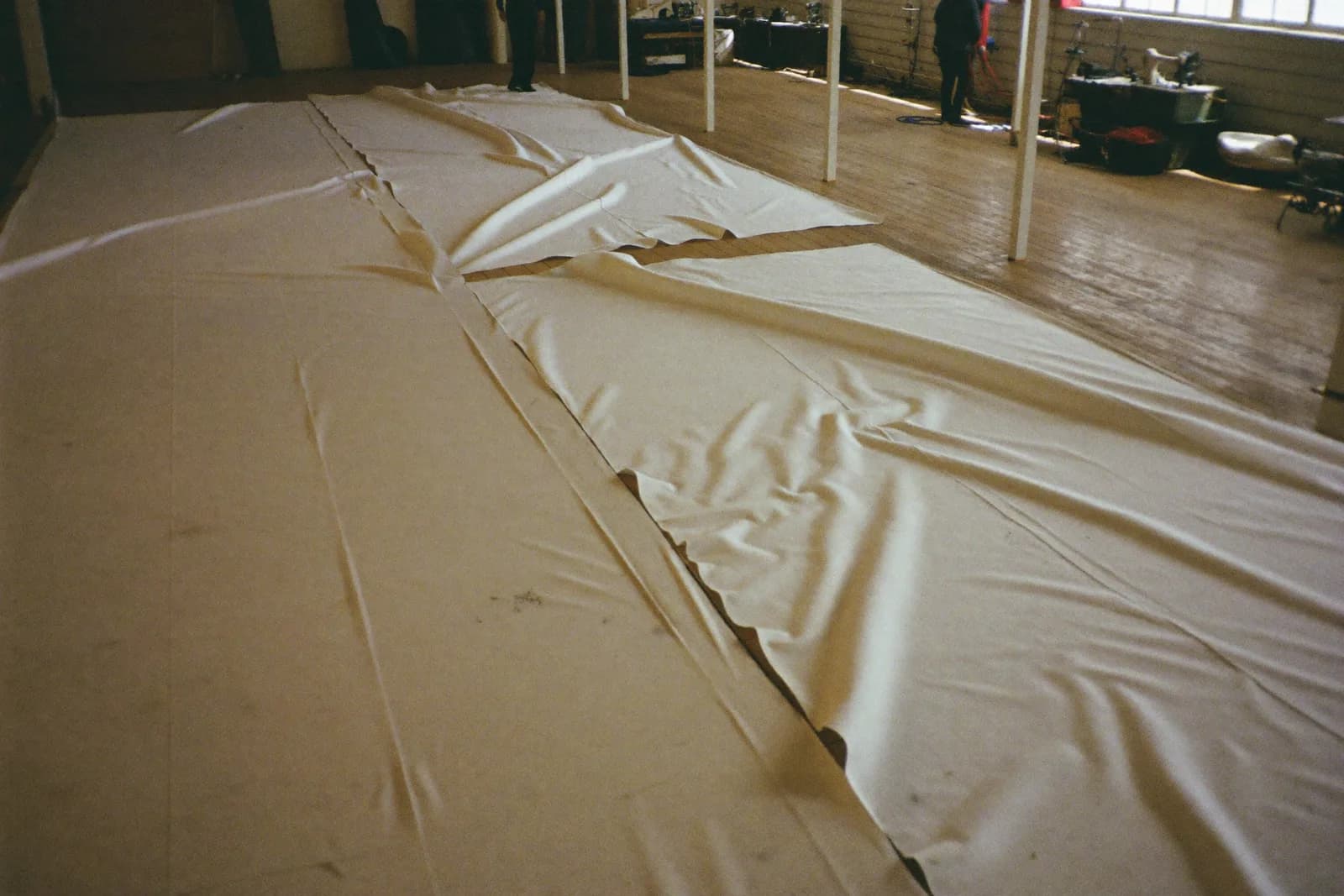
Halyard, the sailmaking and rigging company founded by Tom Aldous and Ana Ferreira, passed $6M in annual recurring revenue in June without ever raising outside capital — a threshold the two founders say they reached three years later than an investor would have liked, and on terms they still own outright.
The figure comes from the company’s own service contracts: rigging inspections, seasonal sail servicing and a replacement programme that bills yearly rather than per job. Aldous says roughly 70% of the revenue now renews on a schedule, which is what let them start calling it recurring at all. One-off sail orders sit outside the number.
Halyard has turned a profit every year since its third. It employs 31 people across the loft and the road crews, up from 24 at the start of 2025. The founders have taken no salary above what the loft floor pays its senior cutters, a rule they set in the second year and have not revisited.
Two term sheets, twice declined
The company turned down two term sheets, the first in 2022 at a valuation Ferreira describes as “flattering and wrong,” the second last autumn from a fund that wanted Halyard to buy two regional riggers within eighteen months. Both would have left the founders with a majority, and both, they decided, would have obliged them to grow faster than they could train cutters.
We said no to venture money twice. Restraint was our strategy.
That training constraint is the one Ferreira keeps returning to. A cutter takes about four years to become fully independent on custom work, and Halyard has never hired one who was already finished. The company runs three apprentices at a time — a number chosen because it is what the senior staff can supervise without slowing down.
What the founders will say about the next year is modest:
- A second loft, in a leased building rather than a bought one, opening in early 2027.
- No acquisitions — the two riggers the fund identified have since been bought by someone else.
- A fourth apprentice slot, contingent on a senior cutter agreeing to supervise it.
Asked what $6M changes, Aldous said the honest answer is the bank covenant on the loft equipment, which now costs the company less. Everything else, he said, is the same work.