Ask a founder how they got to a thousand customers and you will get a system. Ask how they got the first ten and you will get a story about a specific afternoon, usually one they’d rather not repeat. We asked five. Nobody described a launch. Two described being cold in a car park.
Priya Nair, Loom&Co — the market stall
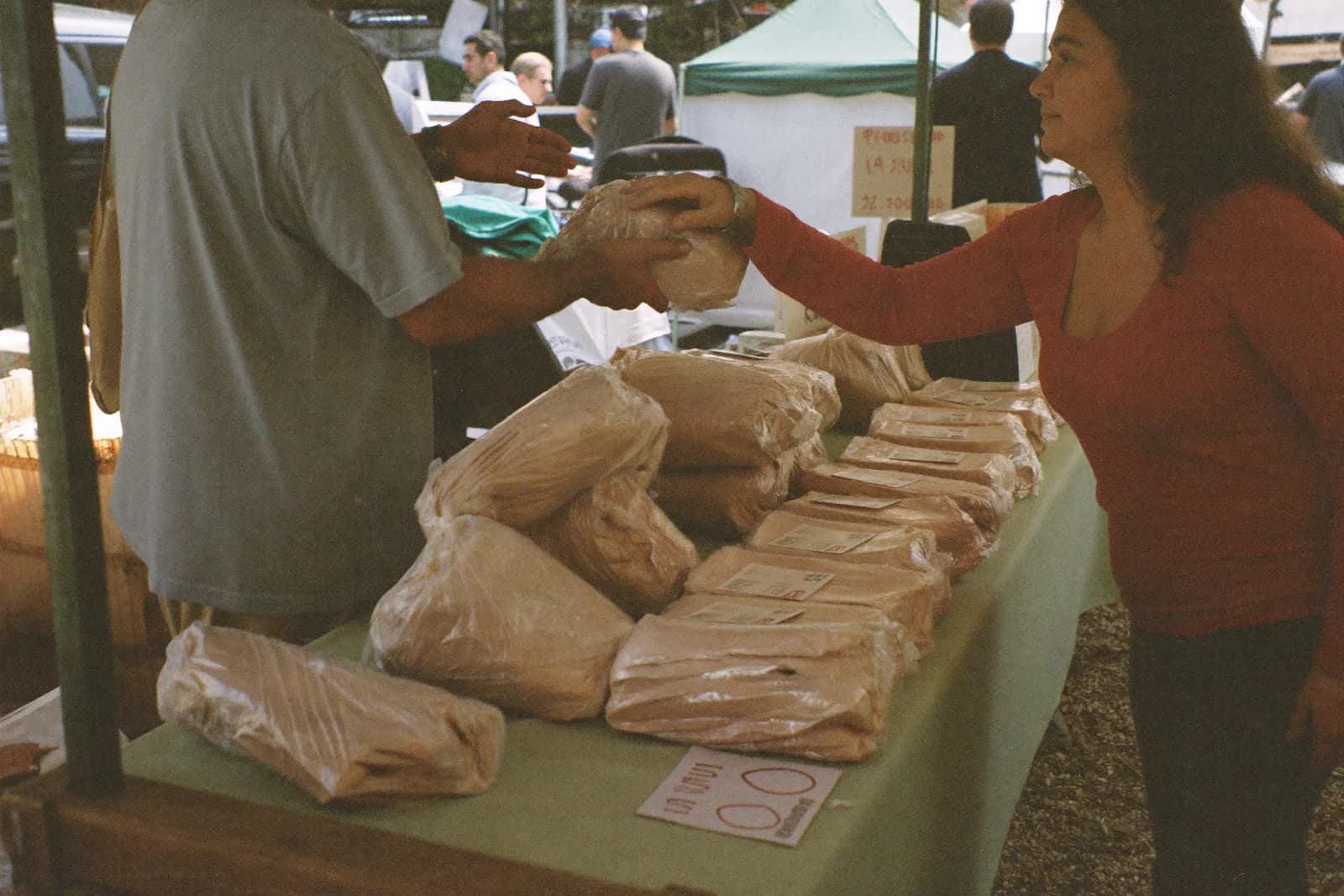
Nair spent eleven Saturdays behind a trestle table at the Kellow Road market before she had a business. She sold nine throws. Ten if you count the one her sister bought, which Nair does not. What she was actually doing there, she says, was not selling — it was watching hands. She learned that people picked up a throw, turned it over, and looked at the reverse. Every one of them, without exception, before looking at the price. So she stopped hiding the reverse. The whole product changed because of a gesture she watched two hundred people make. “The stall was the cheapest research I will ever buy,” she said. “Ninety dollars a Saturday and nobody lies to your face when they’re holding the thing.” Her tenth genuine customer bought in week nine and asked, unprompted, whether she could make forty for a hotel. She said yes, then went home and worked out how.
Tom Aldous, Halyard — the six-week backlog
Aldous’s method was to drive to eleven boatyards and ask each one what they were currently apologizing to customers about. Ten of the eleven said the same thing: sail servicing was six weeks out and no one would commit to a date. So Halyard’s first offer was not a product. It was a date. Aldous quoted a fixed turnaround and put a penalty against it, which Ana Ferreira thought was reckless, which he now agrees was reckless, and which got them six of their first ten customers inside a month.
We didn’t sell better sails. Nobody could tell. We sold a Tuesday, and we hit the Tuesday.
Maya Okonjo, Fieldnote — 4 a.m., in the yard
Okonjo could not get a co-op manager to answer an email. So she stopped emailing managers and started standing in yards at four in the morning, where the drivers were, holding two coffees she had bought on the assumption that somebody would take one. Nobody took one for the first three mornings. On the fourth, a driver named Errol did, mostly — she thinks — out of pity, and then spent forty minutes explaining every reason the printed route in his hand was wrong. She wrote all of it down in a notebook and built the first version of Fieldnote against that notebook, which is why the product asks the driver instead of telling him. The co-op signed six weeks later, and not because of the demo: Errol told his manager the software knew about the Vance gate. “The manager holds the budget,” Okonjo said. “The driver holds the veto. I spent a month pitching the wrong person.”
Nadia Sorrell, Kettle & Print — 340 cold emails
Sorrell’s answer is the least romantic and the one she is most willing to defend: she sent 340 cold emails and got eight customers. She kept the numbers, because she is the kind of person who keeps numbers:
- 340 sent, over nine weeks. Written by hand, one at a time, no template.
- 61 replies, of which 40 were some version of “no, but thank you.”
- 19 calls, 8 customers — roughly 42 emails per customer, at about six minutes each.
- Four hours of work per customer, a trade she says she would take every day of the week.
- Reply rate on emails where she couldn’t find anything specific to say about the recipient: zero. Not low. Zero.
Daniel Kwame, Kelo — one friend, and then a year
Kwame left Nexa with what he now describes as a dangerous asset: a large number of people who owed him a favour. One of them introduced him to a shipper who became customer one. It took a fortnight. He assumed the remaining nine would take a quarter. They took fourteen months, because a warm introduction gets you a meeting and nothing else, and because every subsequent conversation began with the other party working out whether he was still Nexa or now a two-person company in a rented room. “The introduction opens a door into a room where nobody knows you,” he said. “I mistook the door for the room. That cost me a year.” Customers two through ten came, eventually, from the first one — not as referrals, but as reference calls. His single customer spent fourteen months answering the phone on his behalf. Which is the thread, in the end: four of the five got their first ten by physically going where the customer already was — a market, a boatyard, a loading yard, an inbox researched one address at a time. The fifth went where his network was and lost a year finding out that a network is not a market. None of them scaled the method. Nair does not do markets any more; Sorrell has not sent a cold email in three years. It was never a growth channel. It was how they found out what they were actually selling, and it ended the moment they knew.