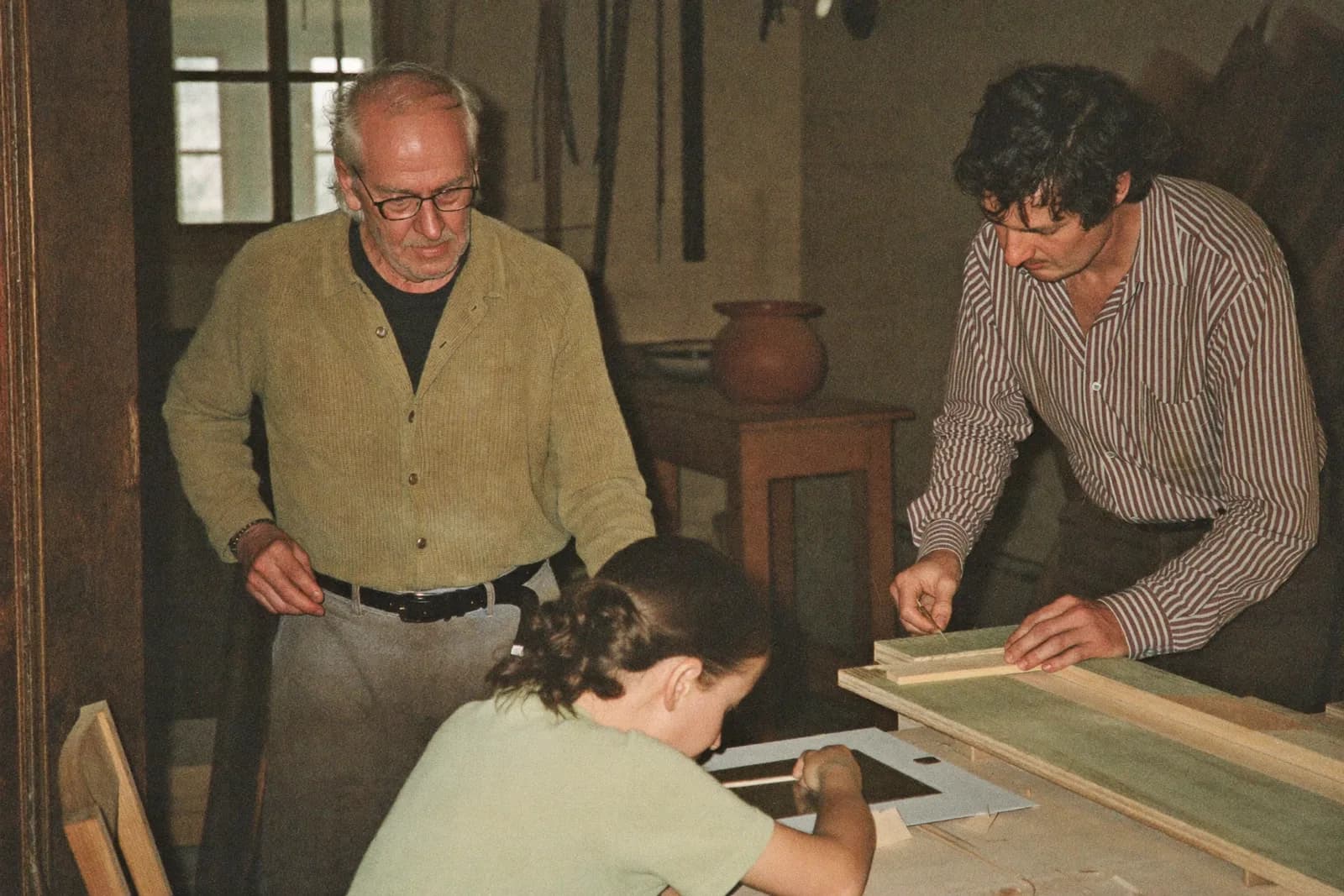
Bern Hollis is 68 and has been offered $4.1M for a bindery he started in 1979. He is instead selling it to a 34-year-old named Trine Aas for $2.6M, payable over nine years out of the bindery’s own profits, with the first payment due in 2028. Aas swept the floor of that building for two summers before she was allowed to touch a press. Hollis’s accountant has explained the difference between the two numbers to him on four separate occasions.
He is not confused about the maths. He is making a different calculation, and a growing number of owners in the craft trades are making it with him: that the buyer who pays the most is the buyer who knows the least, and that what they are buying is not the thing he spent forty-seven years building.
The demographic squeeze
The pressure is arithmetic. The Corrigan Institute estimates 71,000 craft and small-manufacturing businesses in the US have an owner over 62 and no identified successor. Roughly 14,000 change hands each year. Of those, the largest single buyer category — 38% — is a consolidator, usually assembling a regional roll-up. About 11% go to a family member. And 9%, up from 4% five years ago, go to an employee who trained under the owner.
The 9% is the interesting number, not because it’s large but because it is moving in a market where the money says it shouldn’t. Consolidators pay a premium — Corrigan’s spread between a strategic sale and an internal sale is 35 to 60%. Every owner choosing the apprentice is choosing to be poorer by an amount that would, in most cases, have paid for the retirement outright.
Ask them why and you get a version of the same three answers. The consolidator will keep the name and change the work. The staff, most of whom have been there fifteen years, are a cost line in the model. And the owner will be asked to stay for two years as a consultant, which every one of them describes as watching a stranger operate on your own body while being asked for advice.
They kept saying they’d preserve the legacy. Son, the legacy is a way of folding a signature. It is not a logo. You cannot preserve it, you can only do it, and nobody in that room could do it.
How the deal actually gets built
The obstacle is never willingness. It is that a 34-year-old bookbinder does not have $2.6M and no bank will lend it against goodwill and a room full of 1960s German presses. So the deals get built out of the business itself, and after a decade of trial and error they have converged on a recognisable shape:
- A long earn-out — seven to twelve years — paid from operating profit, which makes the seller a lender and aligns them with the buyer not wrecking the thing.
- A small down payment, often the apprentice’s entire savings. Every owner interviewed insisted on this. Nobody values what cost them nothing, and Hollis wanted Aas to feel it.
- Equity transferring in tranches against operational milestones, not calendar dates — the buyer owns 20% when they can quote a job unsupervised, not when a year has passed.
- The seller staying on the floor with no authority. This is the hardest clause and the one that fails most often. Hollis has agreed to two days a week, working, with a written rule that he may not speak to a customer.
- A clawback if the buyer sells to a consolidator inside ten years, which is the closest thing any of these agreements has to a soul.
The failure rate is real and nobody has good data on it, because these transactions don’t get reported. Corrigan’s attempt — a follow-up on 210 internal successions — found 22% had unwound or defaulted within five years. The most common cause was not incompetence. It was the founder failing to leave: two-thirds of the unwound deals involved a seller who retained informal veto power long after they had contractually surrendered it, and staff who kept walking past the new owner to ask the old one.
This pattern is showing up across the craft trades — furniture workshops, letterpress shops, small foundries — and the people doing it tend to find each other rather than any institution. There is no lender who specialises in this, no standard document, and roughly four accountants in the country who will structure one without first suggesting you take the other offer.
Hollis’s reasoning, when pressed, was less sentimental than it sounds. He pointed out that a bindery is a set of hands and a phone number. The consolidator was buying the phone number at a price that assumed the hands came with it, and the hands, he said, would have been gone inside three years — to Aas, probably, who would have opened a bindery across town and taken the work. He is not donating the difference. He is pricing in the fact that his employees can leave.
The first payment is due in eighteen months. Aas has already told him she intends to buy a fifth press, which he thinks is a mistake. He has, he says, no vote.