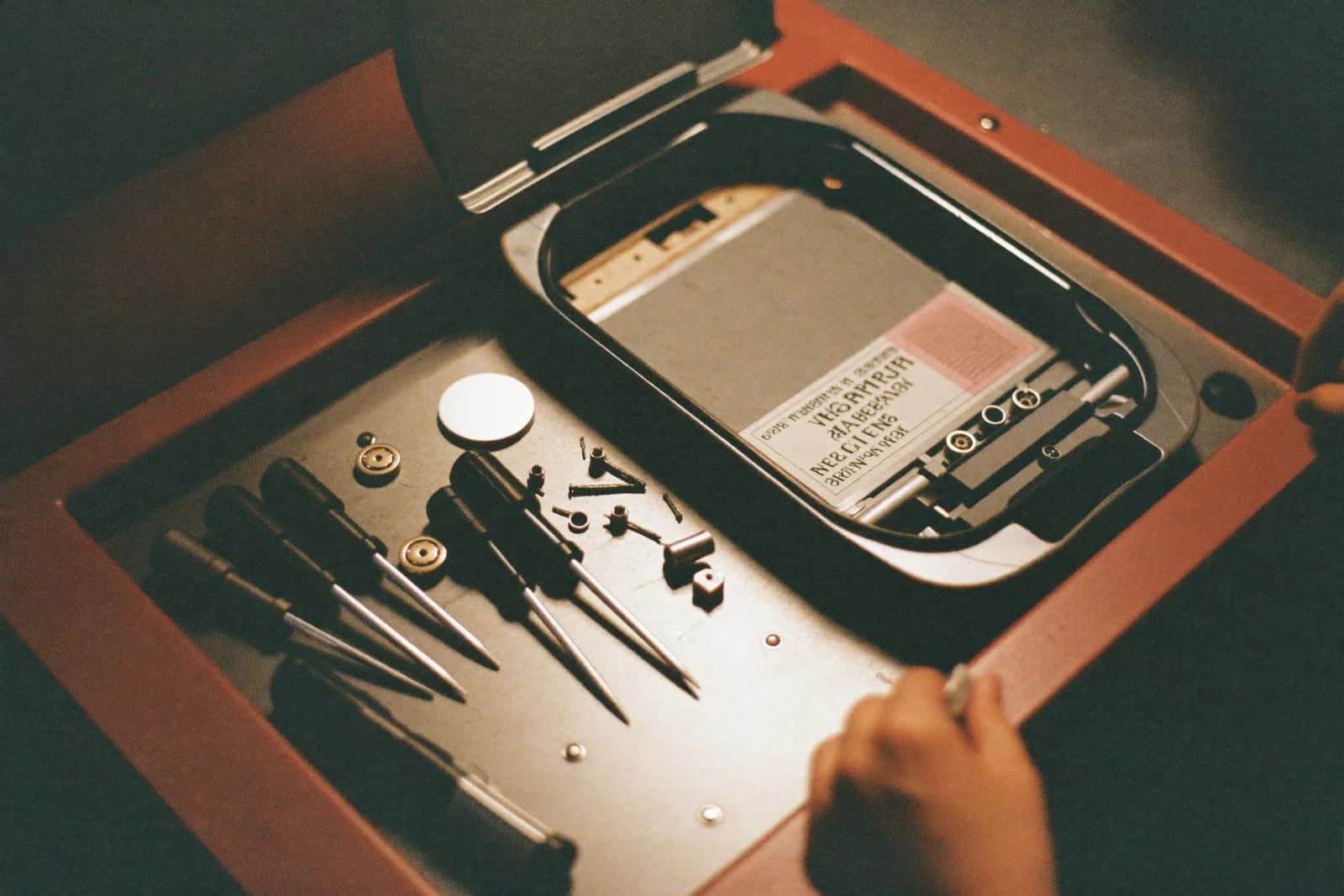
The back wall at Halbert Audio is 340 labelled bins. Bin 112 holds grille clips for a bookshelf speaker discontinued in 2011. There are 900 of them. Ruth Halbert had them made in 2019, eight years after the last cabinet shipped, because people kept writing in, and she has sold 214 since at $9 each. She will run out somewhere around 2050, at which point she will be 84 and it will be someone else’s bin.
The wall costs Halbert about $31,000 a year in space, stock and the two days a week a technician spends behind it. It brought in $410,000 last year — 9% of turnover, at a gross margin of 71%, which is eleven points better than the speakers themselves. Nobody at the company describes it as aftersales. It is a product line, and it is the second most profitable one they have.
The economics of a part nobody wanted to sell
The reason spares margin so well is unflattering to everyone: the customer is already sold. There is no acquisition cost, no comparison shopping, and no negotiation, because a person with a broken tweeter and a working cabinet is not price-sensitive about the tweeter. Halbert charges $64 for a replacement driver that costs her $19 landed. She has never once been asked why.
The Corrigan Institute, which surveyed 1,100 small manufacturers on this, found that firms selling their own spares directly reported a median 12% of revenue from parts and service at margins averaging 24 points above the base product. The number that got everyone’s attention was different: those firms had a repeat purchase rate of 46% against 21% for firms that didn’t. Which is not a coincidence and is not, Corrigan is careful to say, causal in the direction people want it to be. Companies that stock the clip are companies that were already building things worth clipping.
The industry told me spares were a support cost, so for nine years I treated my best margin as a nuisance and posted it out for free. That is the most expensive thing anyone has ever taught me.
What repairable actually requires
Repairability is decided at the drawing, not at the warranty desk, and mostly it is a series of small refusals. The makers doing it converge on much the same list:
- Screws, not glue. This costs about $2.40 a unit and roughly three weeks of an engineer arguing that the glued version is thinner.
- One fastener type across the whole product, so the repair needs one driver and not a kit. Halbert uses a single hex size on everything and treats a second as a design failure.
- The failing part must come out first, not last. If the thing that dies at year six is under the thing that never dies, the product is not repairable, it is disassemblable.
- A published parts list with prices, orderable by a stranger who bought the thing second-hand and owes you nothing. Half the value is that the second owner becomes a customer.
- A service manual that assumes a person with a screwdriver and no training, written by someone who did not design the product and is therefore capable of being confused.
- The commitment in writing, with a date. Halbert publishes a supported-until year on every product page. It is the only claim on the site the lawyers looked at.
The standing objection is that all of this cannibalises sales, and it is worth taking seriously rather than waving off. It is true. A speaker that gets a new driver at year nine is a speaker that does not get replaced at year nine. Halbert’s own numbers show her repeat customers buying, on average, every 6.8 years against an industry figure Corrigan puts nearer four. She loses that sale. What she gets instead is a person who has now paid her three times, tells other people, and does not shop around, because the alternative to Halbert is a thing that will be landfill in 2032 and they know it. Her total revenue per customer over ten years is about 1.9x the replace-it figure. That maths works. It would not work if the speakers were bad.
The real cost is not cannibalisation. It is SKUs. Committing to fifteen years of parts means committing to a warehouse, a numbering scheme, and the exquisite misery of tooling a run of 200 grille clips at a price that makes sense, which mostly it doesn’t — bin 112 exists because Halbert ordered 900 to get the unit cost under a dollar and accepted that she was buying stock for a woman she has not met yet. Multiply that decision by 340 bins and you have a second business inside your business, with its own inventory problem and none of the glamour.
Halbert’s test for whether it is worth it is not financial. She keeps a folder of the letters — actual letters — from people who have fixed something rather than skipped it, and she notes that not one of them has ever thanked her for the speaker. They thank her for the clip. The clip is nine dollars and takes forty seconds to fit, and it is, as far as anyone at that company can tell, the entire brand.